TINNOX Case Studies
When the Visitor Centre Cannot Be Everywhere the Decision Happens
How a network of more than 30 interactive kiosks helped regional discovery move closer to the visitor.
30+ tourism locations, VIC | 2019 | Interactive visitor information
A visitor’s next decision is often made far from a staffed information counter - outside an attraction, near accommodation, at a transport stop or while moving between towns. If nearby experiences are absent at that moment, the visitor may leave the area without discovering what was only a short drive away.
Across the Yarra Valley and Dandenong Ranges, the challenge was geographic. The region’s attractions and businesses are distributed across many destinations. Printed brochures date quickly, and a single visitor centre cannot personally guide every traveller at every decision point.


Thirty sites can become thirty separate service problems
The Yarra Valley environment combines summer heat, cool and damp winter mornings, rainfall and varying connectivity across a broad region. Bureau records at Coldstream show high winter humidity and more than 100 days a year with at least 1 mm of rain. Outdoor touchscreens therefore had to remain legible, responsive and protected through changing conditions.
At network scale, inconsistency is the larger risk. Different enclosure details, content rules, connectivity arrangements or service methods may look minor at one site but become expensive when multiplied across 30 locations and long travel distances.
How the response was shaped
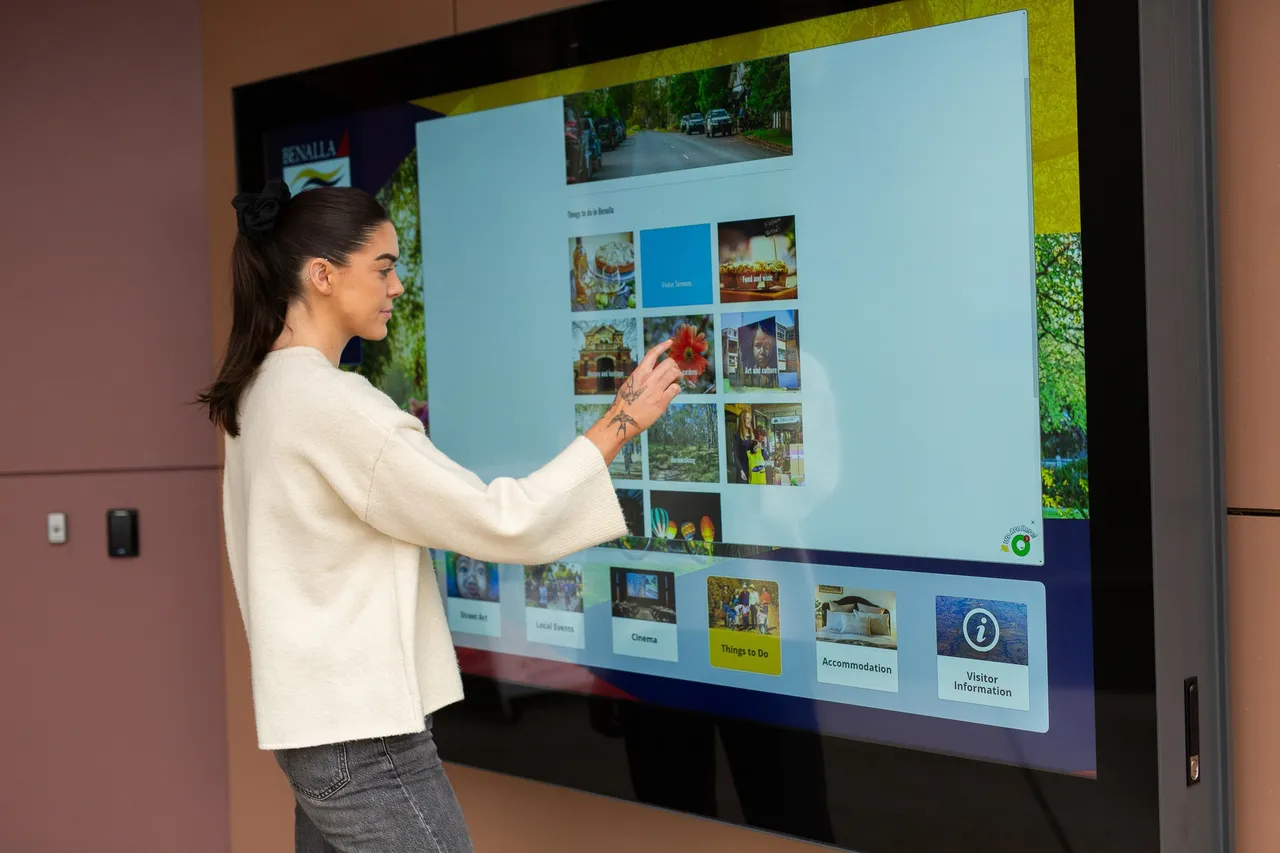
TINNOX established a repeatable 55-inch outdoor touch-kiosk architecture while allowing the installation and content to respond to each host location. Touch was used because visitors had an active task: exploring nearby attractions, services and experiences rather than merely receiving a short announcement.
The rollout required repeatable supply and logistics across approximately 30 sites within a channel-led delivery model. Weather protection, public use, support access and consistent physical construction were treated as network requirements rather than issues to rediscover at each deployment.
What changed
The region gained a distributed visitor-information presence rather than one showcase installation. Travellers can explore location-relevant information while they are already making decisions in the region, helping attractions and local businesses become more visible beyond their immediate frontage.
The additional value is regional dispersal. The network can introduce visitors to experiences they may not have planned, supporting the tourism strategy’s broader ambition for people to see more, do more and stay longer. Its most important asset is not any individual kiosk, but a repeatable platform capable of serving many destinations without rebuilding the visitor experience each time.