TINNOX Case Studies
When the Crowd Arrives at Once, Merchandise Messaging Has Seconds to Work
Melbourne Cricket Ground | Melbourne, VIC | Stadium retail and event-day communication
The Melbourne Cricket Ground can accommodate more than 100,000 people. On a major event day, that audience does not move through the venue as a steady flow. Crowds build before play, surge during breaks and disperse quickly when the event ends.
For a merchandise outlet, those peaks compress the entire customer journey. A supporter may notice a product while walking with a group, decide whether to stop and scan the available offer without ever reaching the counter. Static graphics can look polished, but they cannot respond when the event, team, range or available stock changes.


A retail message competing with the energy of the stadium
The display needed to remain visible inside an environment already filled with movement, venue signage, team colours and competing destinations. Small product messages would disappear into the concourse. Long animations or detailed paragraphs would demand more attention than a passing crowd could give.
The operating risk was equally important. Stadium retail assets sit close to public circulation and must remain secure, cleanly integrated and serviceable without obstructing customer flow. Access for installation and maintenance is shaped by the event calendar; a display that is difficult to service can turn a minor fault into disruption at the point of sale.
Merchandise communication also changes faster than the physical outlet. A new fixture, finals campaign, touring event or sponsor commitment may need a different visual treatment. When the communication surface is fixed to one printed campaign, every change involves production, access and replacement - often under the same time pressure as the event itself.
Giving the outlet one large, changeable visual priority
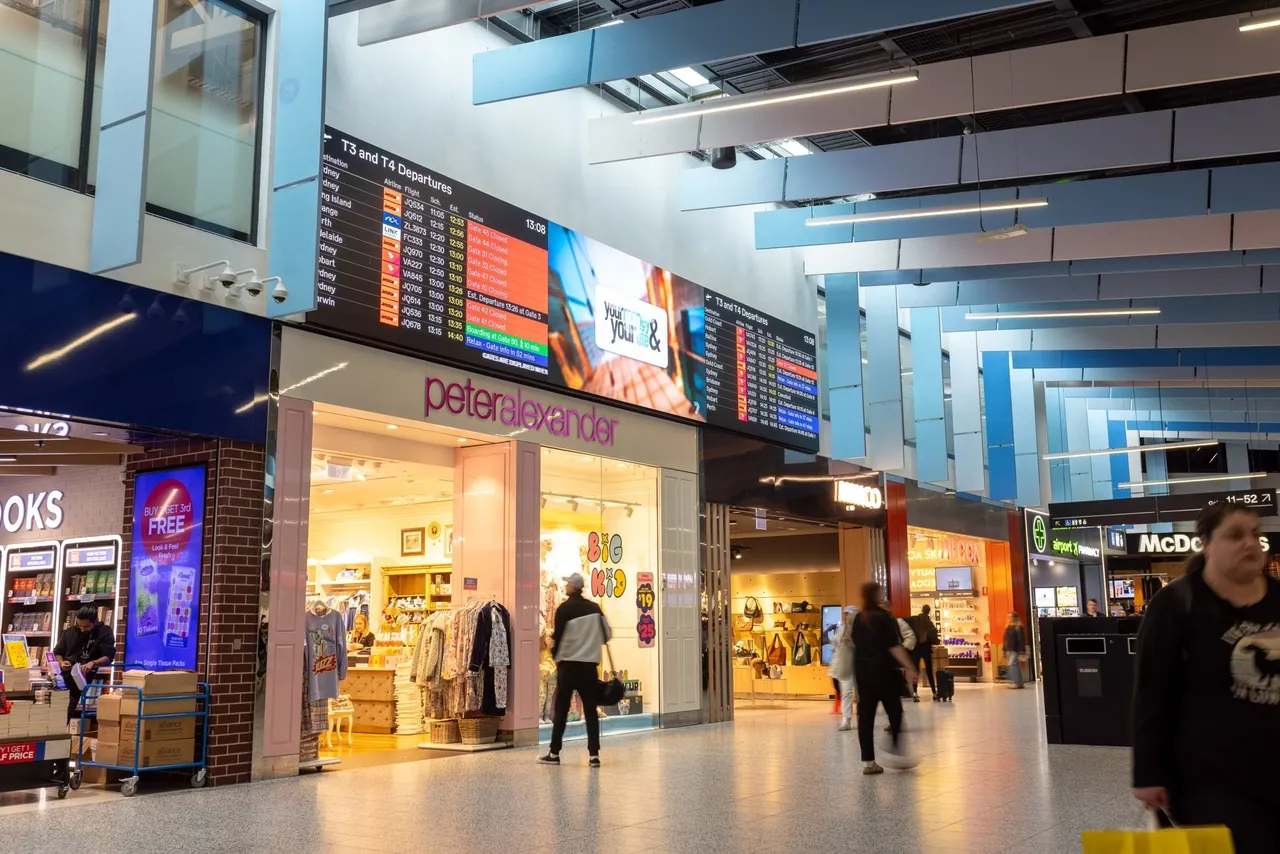
TINNOX used an established large-format LED billboard architecture to create a clear focal point at the merchandise location. The scale allowed a small number of strong messages to be understood from the concourse rather than only from directly in front of the counter. High-output LED supported visibility in the venue environment, while modular construction allowed the active display area to follow the available frontage without introducing the grid of a multi-panel LCD wall.
The value of those characteristics was practical. One continuous image gave campaigns enough visual space to show products, team imagery, event-specific creative and simple calls to action without splitting the message across bezels. The display could change with the event schedule while the physical shopfront remained in place.
TINNOX coordinated the display, mounting and commissioning around the venue interface. Structural support, power, signal, finish lines and future service access were treated as part of the retail asset rather than left as separate decisions between the screen supplier and site trades.
More selling moments from the same frontage
The merchandise outlet gained a communication surface capable of changing at the speed of the event calendar. Before gates open, the display can establish the relevant range. During peak periods, it can simplify the message to a hero product or short promotion. As the audience changes, the content can move to the next team, artist, fixture or campaign without rebuilding the shopfront.
That does not prove a specific increase in merchandise revenue, but it changes the conditions under which a sale can occur. More passing patrons can understand what the outlet is offering before deciding whether to join the queue. Staff are less dependent on a collection of printed signs to explain the current promotion, and the venue gains a repeatable platform for commercial partners and event-specific content.
The success is not only visibility. It is operational relevance: a permanent stadium asset that can keep pace with temporary events.