TINNOX Case Studies
One Lobby, Three Audiences: Visitors, Tenants and the Building Itself
FIVEX | Melbourne, VIC | Commercial property and tenant experience
FIVEX is a family-owned commercial property company with more than 50 years in the sector, leasing and self-managing office and retail properties in prominent Sydney and Melbourne locations. For a property owner, the lobby is shared territory. It must welcome a first-time visitor, support the tenants who use it every day and communicate the standard of the building to future occupiers.
Those audiences do not all need the same message. A visitor may be looking for orientation or reassurance that they have arrived at the right address. A tenant may need current building information. A leasing prospect is reading the environment for a different signal: whether the property feels actively managed, contemporary and capable of representing their own organisation.


The danger of designing only for the opening photograph
A statement display can give a lobby immediate visual impact, yet still become operationally empty. If it exists only to show one brand film, the content becomes familiar and staff gradually stop seeing it. If every tenant can publish without governance, the lobby can lose visual discipline and begin to resemble a noticeboard at architectural scale.
The physical integration carries the same tension. A screen large enough to become a focal point must be proportioned to the wall and normal viewing paths. At close distance, panel joins and coarse pixels undermine premium content. Behind the finish, inadequate service access can make future maintenance disproportionately disruptive to tenants and the lobby.
FIVEX therefore needed more than a digital feature. The asset had to contribute to the building’s character while remaining useful to the people who operate and occupy it.
Creating one architectural communication surface
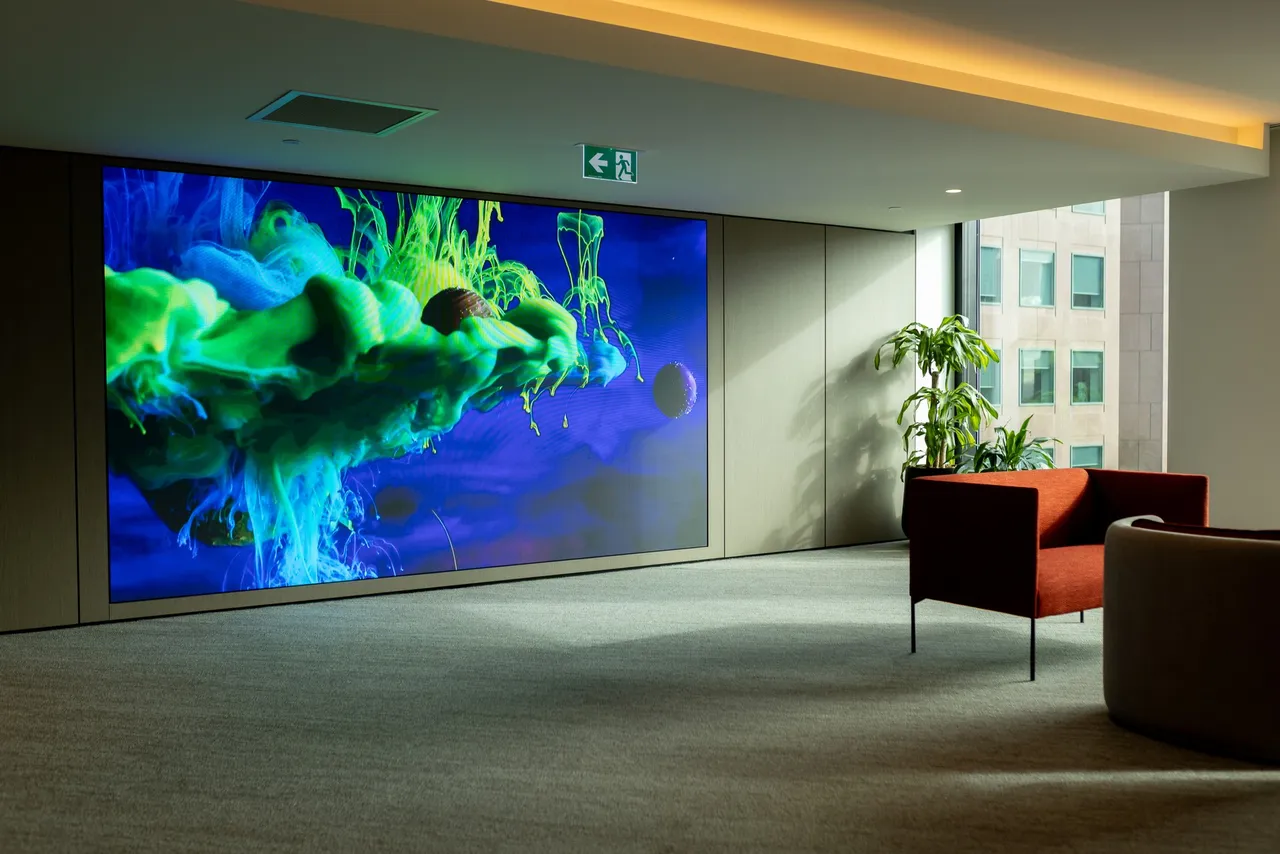
TINNOX selected a modular fine-pitch LED platform designed for premium indoor commercial environments. The modular format allowed the display to follow the lobby’s architectural proportion rather than the fixed dimensions of a television. Fine pixel density protected text, tenant content and detailed imagery as people moved closer, while the seamless surface allowed the building to present one composed visual field.
The screen was coordinated with the supporting structure, wall finish, power and signal routes so the installation read as part of the lobby rather than an object mounted after completion. Serviceability was considered behind the visible plane, allowing components to be reached without turning routine maintenance into a refurbishment.
The project also preserved operational flexibility. The canvas could carry FIVEX’s property identity and leasing content while providing a controlled place for tenant stories, building updates and event communication. The technology supplied a standard platform for the use case; the value came from how its placement and content roles were defined for the building.


A property asset that works between leasing campaigns
The completed wall gives FIVEX one focal point through which the building can speak to different audiences without filling the lobby with separate signs. Visitors can encounter welcome or orientation content. Tenants can see current building information and selected community stories. Leasing teams can present the property and its location without relying on a permanent printed campaign.
That creates an additional form of return: the lobby can change as the tenant mix, property initiatives and leasing priorities change, while the architectural investment remains in place. The display does not need to become louder to remain relevant; it needs to carry the right layer of communication for the day.
The result is a digital asset serving the building, rather than a building serving as a backdrop for the screen.