TINNOX Case Studies
One Council Network - Without Forcing Every Location to Behave the Same
How Benalla connected streets, parks, a library and visitor settings through one coordinated communication program.
Multiple community locations, VIC | 2025 | Multi-site public communication
A person passing through a public street may give a message only seconds of attention. A visitor inside an information centre may be ready to explore attractions, events and local services in depth. Treating those two people as the same user creates either an outdoor display that is unnecessarily complicated or a visitor experience that is too shallow.
Benalla Rural City Council was not solving one screen requirement. It was connecting different public settings through a communication network that needed to feel consistent without becoming rigid.


Scale multiplies small mistakes
Benalla’s environment moves between hot summers and cold winter mornings; long-term records include summer temperatures above 40°C. Outdoor locations also introduce sunlight, rain, public contact, site-specific footings and different viewing directions. A weak assumption repeated across several sites becomes a network-wide service burden.
The same multiplication applies to governance. Different departments, content owners and user needs can produce disconnected systems, duplicated training and unclear responsibility. Standardising every physical feature would not solve that problem. It could simply reproduce the wrong experience more efficiently.
How the response was shaped
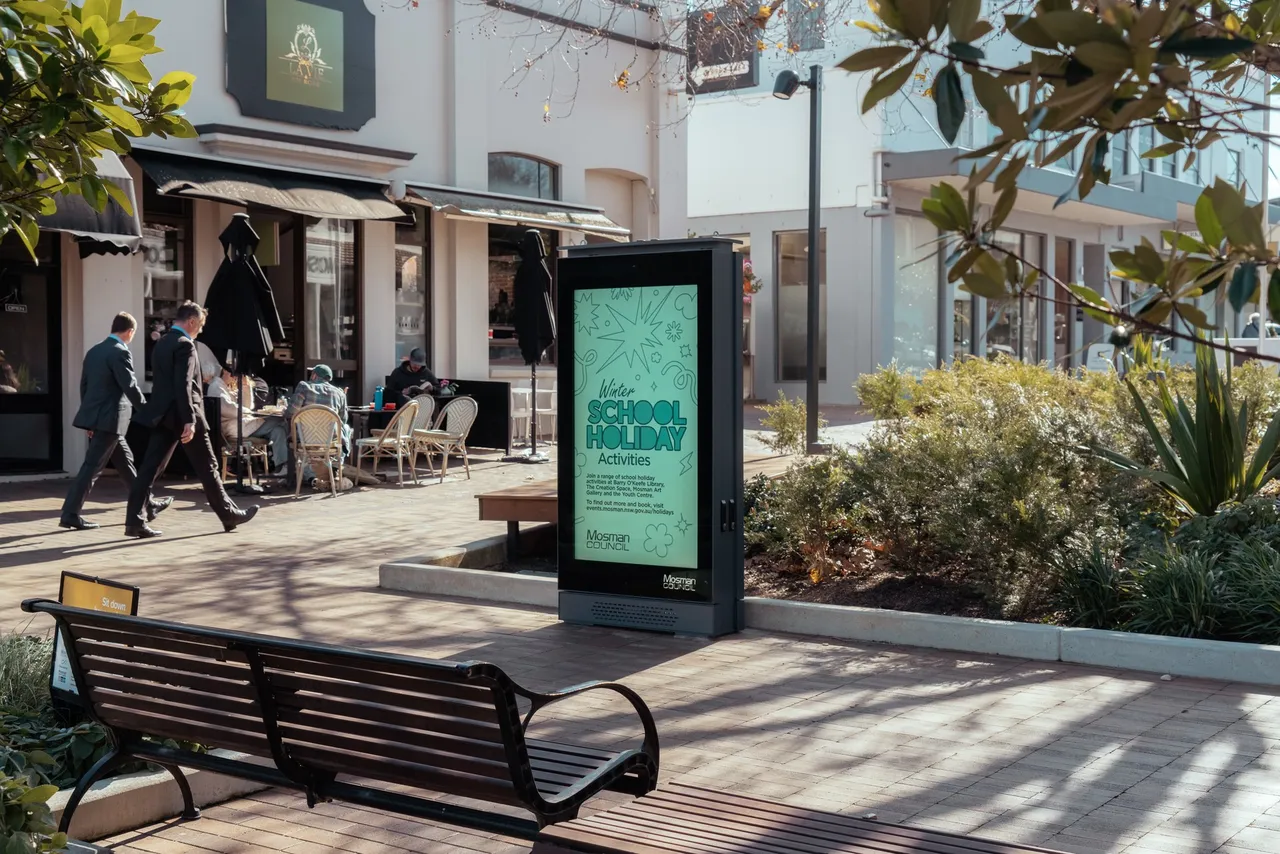
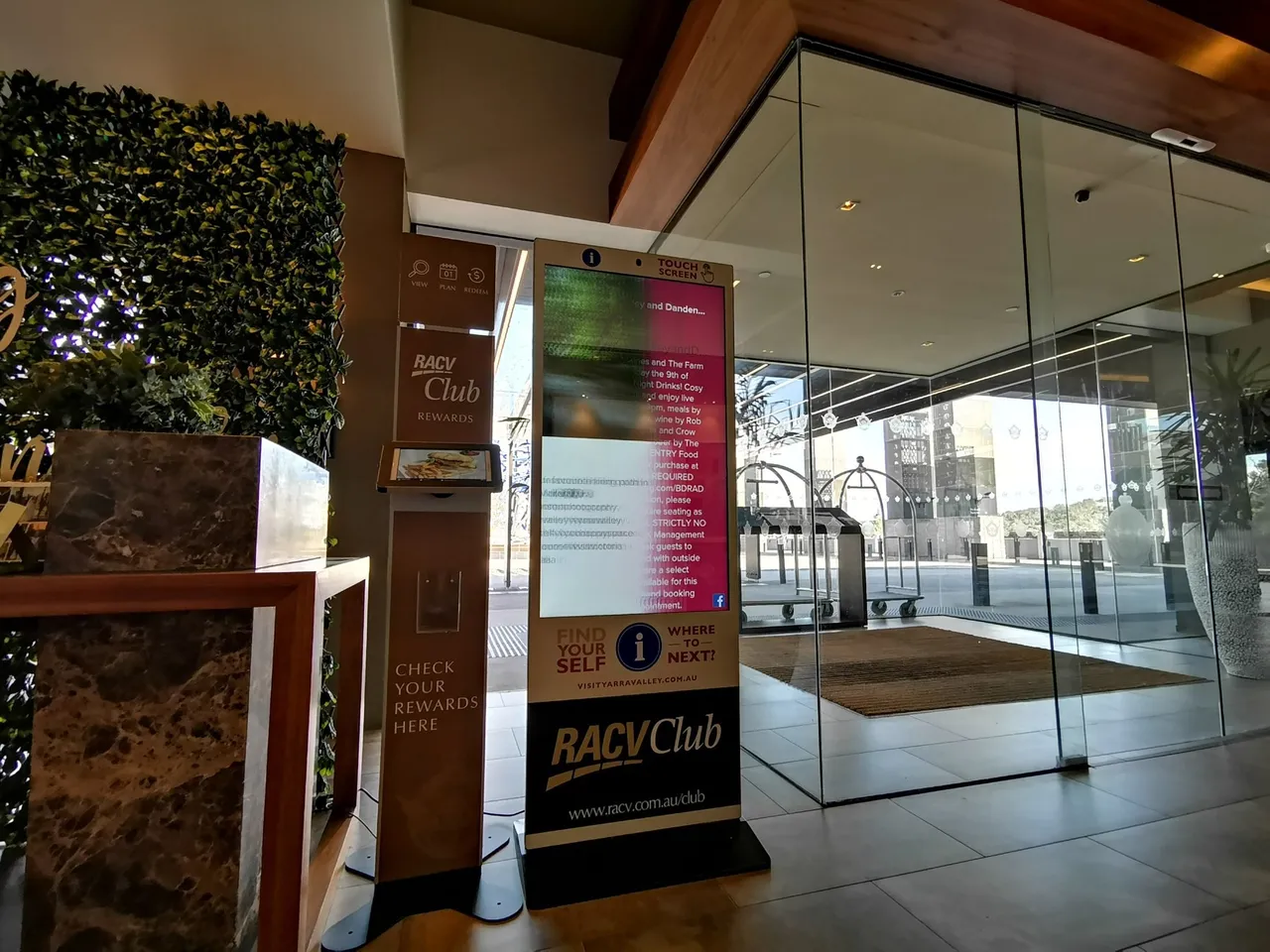
TINNOX mapped the communication behaviour at each location before selecting the format. Double-sided 55-inch RobustPro kiosks supported fast, visible messages where people approached from more than one direction. At the visitor setting, a larger 86-inch RobustMini touch display allowed people to actively explore attractions and local information.
The physical interfaces changed by site, while the program retained a consistent approach to construction, documentation, commissioning and support. Installation and stakeholder coordination were managed at both levels: each location was treated as its own environment, and the deployment was managed as one council network.
What changed
Benalla gained a shared communication infrastructure capable of supporting two different behaviours: immediate public messaging and deeper visitor discovery. Residents can encounter timely information while moving through community spaces; visitors who choose to engage can navigate more detailed local content.
The network also creates value beyond any one location. Council-wide announcements, events, consultations and emergency information can be coordinated while individual sites retain locally relevant content. The project’s success lies in what was standardised - governance, delivery and support - and what was deliberately allowed to remain different.