TINNOX Case Studies
The Launch-Day Showpiece Still Has to Earn Its Space on Monday
Empire | Corporate lobby | Workplace and property communication
A new corporate lobby is often judged first through photography. The feature wall is lit, the finishes are untouched and the content has been produced for the reveal. The harder test begins after launch, when employees pass it every morning, visitors wait beside it and someone inside the organisation must decide what it should show next.
Empire wanted a strong digital focal point, but visual impact alone would not justify the space over the life of the fit-out. The display needed an everyday role - one broad enough to support visitors, internal communication and changing business priorities without turning the lobby into an advertising zone.
The risk of becoming expensive digital wallpaper
Large screens attract attention when they are new. Relevance declines quickly when the content has no owner, every update requires technical support or the canvas was designed around a single opening campaign. The hardware may continue operating perfectly while the business outcome quietly disappears.
The lobby setting makes that failure visible. Employees see repetition. Visitors notice a blank screen or an outdated announcement. An asset intended to communicate progress can instead suggest that the organisation has stopped maintaining the experience.
Physical decisions can lock in the same problem. A consumer television limits scale and introduces a device-like appearance. A tiled LCD wall creates bezel lines through brand imagery. An LED surface can solve both issues, but only when its proportion, viewing distance, brightness and integration are designed for the room rather than selected for maximum size.
Designing for a content life, not one content moment
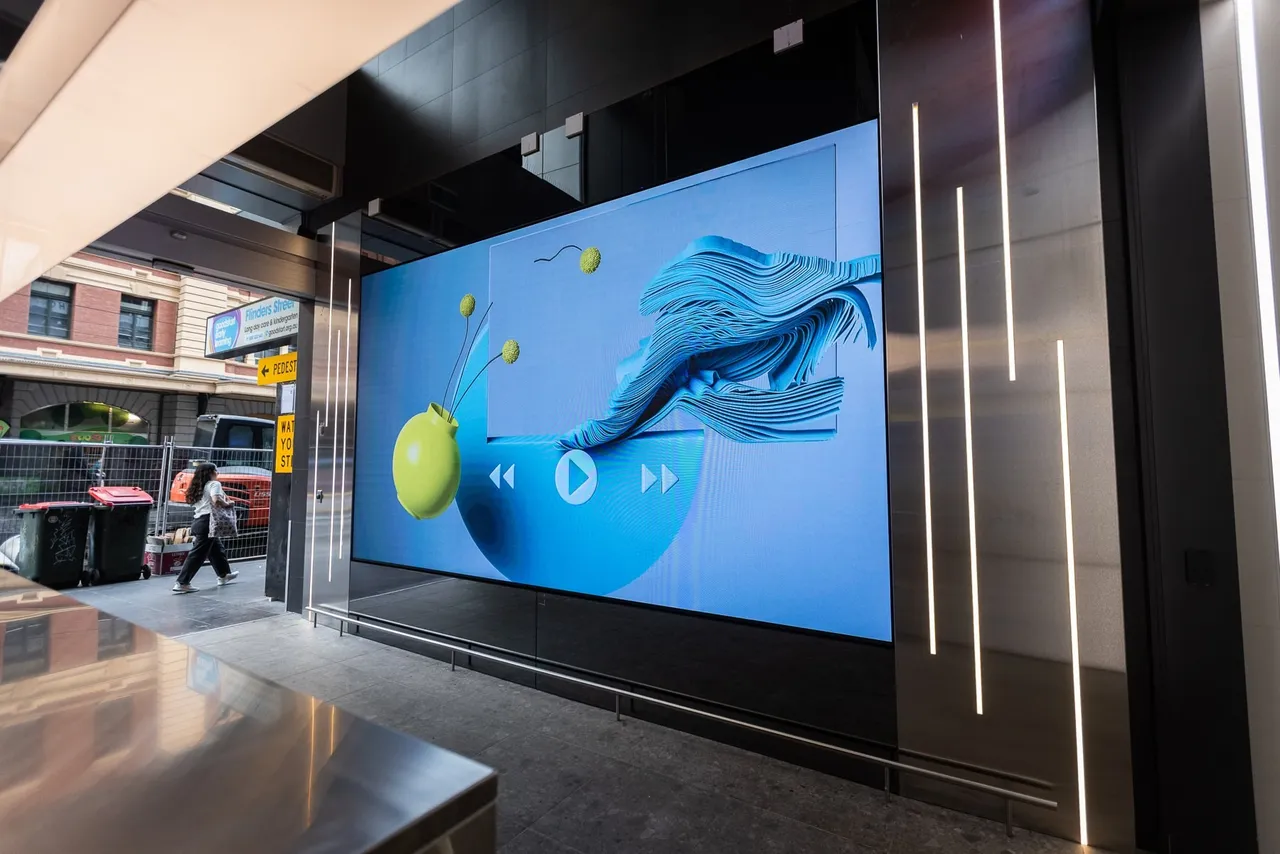
TINNOX used an established fine-pitch indoor LED platform to create a single seamless focal point at the scale required by the lobby. The display format supported detailed corporate content at normal reception distance and could be commissioned to sit comfortably with the interior lighting rather than overpower it.
The screen’s relationship to the wall, supporting structure, power, signal path and future service access was coordinated as part of the installation. This protected the clean architectural result while keeping the system maintainable after the fit-out team had left.
Just as importantly, the canvas was not limited to one visual purpose. It could move between brand storytelling, visitor welcomes, company milestones, project showcases, event content and practical workplace information. That range allows content teams to choose intensity: a major announcement can take over the wall, while everyday operation can use slower and quieter material.
One focal point, several reasons to keep using it
Empire gained the architectural presence it wanted without fixing the lobby to one message. The wall can create an immediate sense of scale for a first-time visitor, then serve a more practical communication role for the people who pass it every day.
The added value is adaptability across the life of the workplace. Campaigns end, leadership priorities change and new projects need to be introduced. The physical canvas remains useful because the communication layer can change without a new fit-out or another device being added to the lobby.
A focal point earns its value when the organisation still has a reason to switch it on after the opening photographs are finished. In this case, the technology became infrastructure for changing stories rather than the story itself.