TINNOX Case Studies
When the Screen Becomes Too Visible, the Artwork Disappears
How a modular LED wall created a flexible digital canvas without forcing artistic work into the proportions of commercial display technology.
Fortitude Valley, QLD | 2026 | Cultural and experiential communication
In a gallery, technology succeeds differently. A visitor should notice the work, its scale and its relationship to the room - not the joins between panels, the edge of a television or the engineering required to keep the image running.
The Institute of Modern Art required a programmable surface capable of supporting changing artistic and visitor experiences. A standard screen would have dictated the proportions. A poorly integrated LED wall could have become an object competing with the work it was intended to present.


Creative freedom can be lost through technical convenience
Visitors may experience gallery content from across the room and then move close enough to examine texture, colour and detail. Seams, unsuitable pixel density or inconsistent colour behaviour become part of the artwork whether the curator intends them to or not. Structural tolerances, heat and future service access must also remain largely invisible.
The operational setting added another layer. The IMA is a free public gallery with a changing exhibition and event program. A system that required specialist reconstruction for every new use would constrain rather than expand the curatorial possibilities.
How the response was shaped
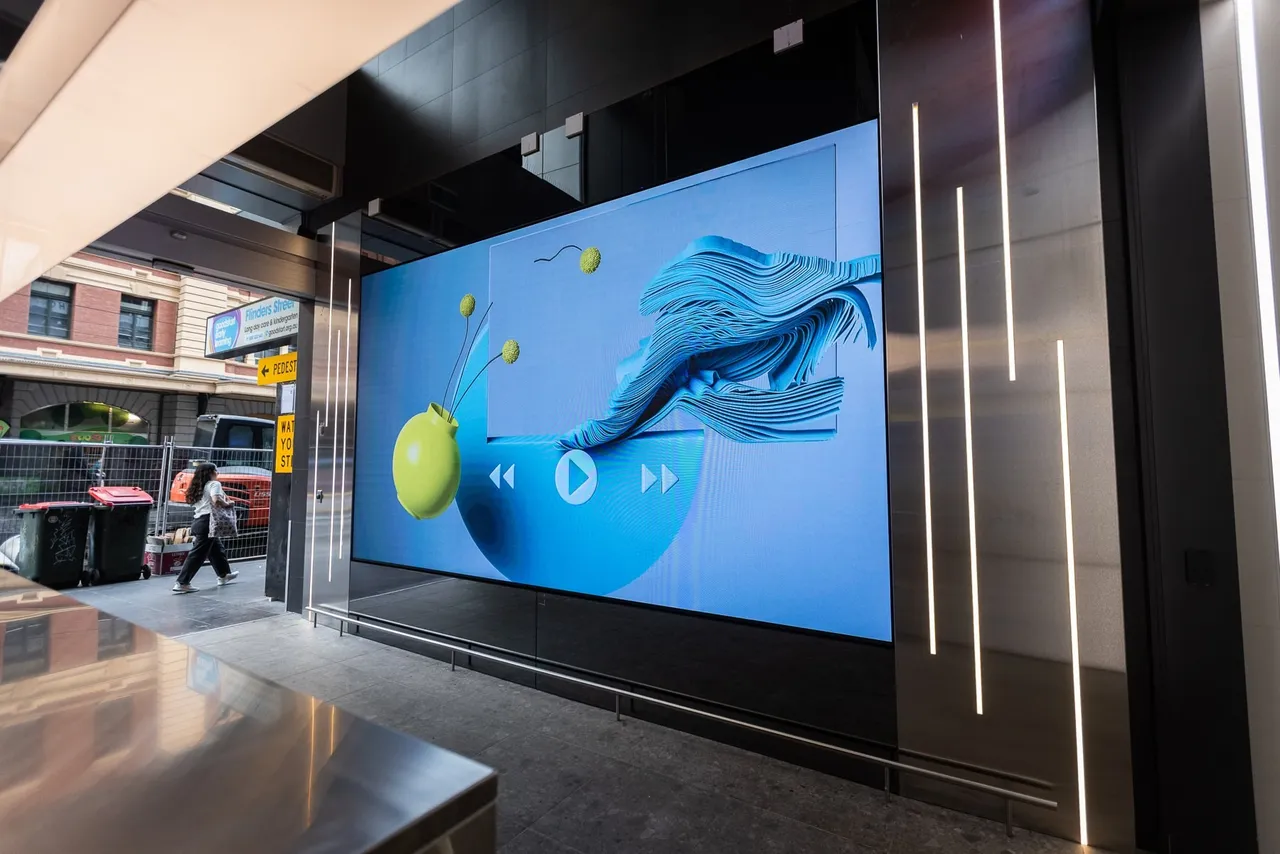
TINNOX treated the creative dimensions as the starting point and integrated a modular fine-pitch LED wall into a custom structure. PrecisionPro P2.5 provided a bezel-free visual field while allowing the canvas to follow the intended architectural scale rather than a television manufacturer’s standard format.
The LED system, structural interface, installation and commissioning were coordinated together. Alignment, heat management and front-facing finish were resolved so the serviceable technology remained behind the visitor experience.
What changed
The venue gained a digital canvas that can support changing artistic programs without replacing the physical display environment. Curators can work with motion, scale and continuity across one visual field rather than designing around a grid of conventional screens.
The additional outcome is freedom over time. The same architecture can host different commissions, public programs and experiential content while the technology remains visually subordinate to each new idea. The wall is present when the work requires it and quiet when the work takes control.